Sustainable Landscaping
Facilities Management approaches campus landscaping from a systems perspective, with the goal of creating a more progressive, species-diverse, and sustainable environment for the CSU community.
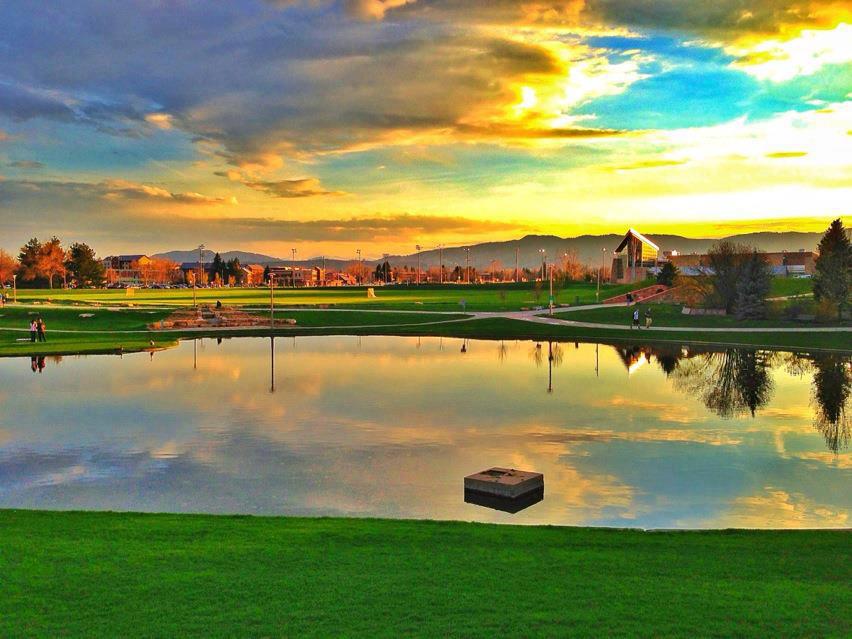
A prime example is the renovation of the Lagoon. This beloved location was transformed into a smaller pond to reduce evaporation and includes a water-quality feature that helps clean campus stormwater. The space also includes a walking path, areas for direct public interaction with the pond, and handicap accessibility. The overall outcome — and a goal of all sustainable landscaping efforts at CSU — is an environment that supports both the physical and mental well-being of the campus community.
Sustainable Landscape Focus Areas
Campus Arboretum & Tree Campus Higher Education
Facilities Management is responsible for approximately 9,000 trees distributed across three campuses. Trees provide shade and cooling, enhance campus beauty, help protect against wind, and improve air quality. CSU is recognized as a Level III ArbNet Arboretum and is Tree Campus Higher Education certified.
Pollinators & Bee Campus USA
Facilities Management promotes best practices for creating pollinator-friendly spaces across campus, including the installation and maintenance of pollinator gardens. In recognition of the critical role pollinators play in the surrounding ecosystem, CSU is proud to be Bee Campus USA certified.
Integrated Pest Management
Facilities Management uses a holistic approach to managing animals, insects, and weeds through Integrated Pest Management procedures that align with the EPA’s standards for environmentally safe practices.
Irrigation & Drought Response Plan
Since the drought of 2002–03, CSU has managed irrigation through a water budget and targeted conservation practices, resulting in a 25–30% reduction in irrigation water use.
Water Use Overview
- Approximately 650 acre-feet of water are used within CSU’s annual irrigation budget.
- 400 acre-feet of irrigation water are allocated specifically for this purpose under state water law.
- On average, over half of the water used on campus each year has a first use in hydraulics experiments at the CSU Hydraulic Laboratory. Smaller experiments recirculate that water.
- Some water is also used for evaporative cooling, reducing the need for treated domestic water in campus cooling systems.
- Water not absorbed for plant growth or used for cooling returns as runoff flow to the Poudre River, creating an additional environmental benefit.
Ongoing Water Conservation Measures
- Reduction of irrigated turf areas
- Use of native and low-water-use adapted plant materials in new landscapes
- Watering based on evapotranspiration rates of managed plant materials
- Flow sensors on major system legs to detect excess flow and shut off water
- Pilot use of soil moisture sensors tied to irrigation controls
- Central irrigation controls with smartphone access
- Watering within a 12–13 hour nighttime irrigation window
Why This Matters
A successful drought response plan must balance conservation with the economic, public-health, and environmental value of an irrigated, appropriately landscaped, and fully stocked urban forest.
The CSU Horticulture and Landscape Architecture Department has also published research on the hidden values of landscapes that helps quantify these broader benefits.